
Weekly Briefing Friday, September 18, 2026 |
|
|
This Week in PropTech & ConTechCurated intelligence on deals, technology, and the built world.
|
 Motive · United States Motive Takes $1.3bn Privately and Withdraws Its IPO FilingMotive has secured more than $1.3 billion in growth financing from General Catalyst's Customer Value Fund and, in the same announcement, withdrew the S-1 it filed in December 2025 for a New York listing under the ticker MTVE. The San Francisco company calls itself the AI platform for physical operations, covering drivers, vehicles, equipment and fleet spend across close to 100,000 customers, construction among them. Annual recurring revenue has passed $600 million and is growing 30 percent year on year, customers spending above $100,000 a year are up almost 60 percent, and net revenue retention sits above 120 percent. General Catalyst's Pranav Singhvi joins the board. The capital is earmarked for AI products, including maintenance and operations intelligence, and for go-to-market expansion. Read more → |
 ENR · United States Wyre AI Raises $5M for Preconstruction, With a Tier-One Contractor on the Cap TableWyre AI announced $5 million across pre-seed and seed on 10 September, with the seed portion led by Ironspring Ventures and participation from WND Ventures, the corporate venture arm of contractor DPR Construction, and Virginia Innovation Partnership Corporation. Angels include Amar Hanspal, former co-CEO of Autodesk, Egnyte co-founder Rajesh Ram and MCN Build's Joseph Khoury. Founder Sunil Dorairajan co-founded Pype, which Autodesk acquired in 2020, and the company is emerging from roughly 15 months in stealth. Two products launch with it: Wyre Scopes turns drawings and specification books into trade-specific scope packages, and Wyre Check cross-references drawings against specs to surface gaps before a number goes into a bid. Read more → |
 CompositesWorld · Spain Strong by Form Closes €5.8M on a Slab Designed to Displace ConcreteStrong by Form, founded in Chile and headquartered in Madrid, announced the €5.8 million first close of a €10 million Series A led by boisei investments, the venture arm of a US family office, with forestry group CMPC returning from the seed round alongside VX Ventures, Ternel, Savia Ventures, Teampact Ventures, Axel Carbon and FINSA. Its Woodflow-core technology uses computational design to place wood fibre only where a floor carries load, which the company says produces a 10-metre structural slab 80 percent lighter than concrete while using up to 75 percent fewer trees than comparable mass timber. The proceeds fund European manufacturing capacity and certification over two years, with partners lined up in Spain, France, Germany and Switzerland. Read more → |
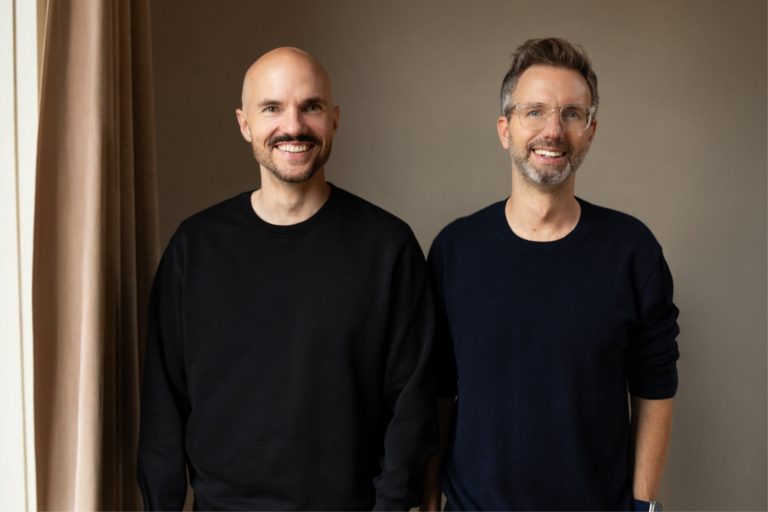 EU-Startups · Germany syte Raises €9M Series A to Automate Everything That Happens Before a Project StartsMünster-based syte has closed a €9 million Series A led by amberra, the venture studio of the Volksbanken Raiffeisenbanken cooperative financial group, with NRW.BANK joining as a new investor and existing backers including High-Tech Gründerfonds, vent.io and Vantage Value following on. The platform assembles land and property data for a given address to answer what can be built on a plot, which zoning and construction rules apply, what renovation and energy work is required, and whether the numbers work, compressing review the company says otherwise runs to weeks. syte now maps more than 62 million parcels across Germany, serves over 200 customers, and has doubled annual recurring revenue year on year. Read more → |
 TechCrunch · UAE The UAE Leads a $3bn Round in The Boring Company and Buys 150km of TunnelThe Boring Company has raised a $3 billion Series D led by the United Arab Emirates and its affiliated investment entities, valuing the company at $23 billion, roughly four times its 2022 mark. Sequoia Capital, Andreessen Horowitz, Temasek, Valor Equity Partners, Vy Capital, Human Capital, Shamal Holding and Baron Capital also took part. The company says it now plans more than 150 kilometres of underground infrastructure across the UAE, extending work already underway on Dubai Loop, with the balance going to hiring and to development of its Prufrock boring platform. Las Vegas remains the only Loop system carrying passengers, and tunnelling in Nashville began in February. Read more → |
 AGBI · Saudi Arabia Expo 2030 Riyadh Signs Its First Private Partnership, a SAR3.2bn JV for Expo VillageExpo 2030 Riyadh Company, wholly owned by the Public Investment Fund, has signed a SAR3.2 billion ($853 million) joint venture with Riyadh developer Mohammed Al Habib Real Estate Company to develop and deliver Expo Village, the residential community for official participants and delegations. The scheme covers roughly 2,300 apartments for about 5,500 residents, plus retail, dining, amenities and operational facilities, connected to the Expo site by the Expo metro station and to King Khalid International Airport. Expo 2030 Riyadh provides strategic oversight and defines requirements; the developer brings development, investment and operating capability. The agreement was signed by ERC CEO Talal Al-Marri and Abdullah Mohammed Al Habib. Read more → |
 AGBI · UAE Nakheel Awards AED800M for 537 Sold-Out Homes on Dubai IslandsNakheel, part of Dubai Holding Real Estate, has awarded a main construction contract worth more than AED800 million ($218 million) to Metac General Contracting for phases one and three of Bay Grove Residences on Dubai Islands. The scope covers 537 one to four bedroom homes across seven buildings, together with basements, associated infrastructure and amenities, with main works due to complete in late 2028. Phase one carries 296 homes and phase three 241. A further 617 homes across phases two and four are still to be appointed, out of 1,154 in the full community. Read more → |
Long Read “How Private Debt Went from Niche to a $2 Trillion Industry”Victoria Ivashina, Harvard Business School
Victoria Ivashina of Harvard Business School traces how private debt went from a niche financing route to roughly $2 trillion in fifteen years, and her account is useful because it treats the growth as a second-order effect rather than a story about itself. Post-2008 allocations flooded private equity, which pushed into the middle market; PE returns depend on leverage; and banks were never going to put their own balance sheets behind high loan-to-value risk, even before the crisis. That gap is the industry. The forward-looking part is the one operators in this region should read twice. With private equity fundraising flat over the past five years, private debt has pushed into new territory, and Ivashina names data centres as one of the places it has gone, through large transactions. She is not alarmed by the size of the market, but she flags two things: valuation practices are not standardised, and uncertainty about valuations makes capital flows jumpy; and what matters more than the magnitude of private debt is what it is connected to, because a small problem in one place can be amplified by something else. Her reference point is subprime in 2008. Read the essay → |
|
|
|