
Weekly Briefing Friday, September 4, 2026 |
|
|
This Week in PropTech & ConTechCurated intelligence on deals, technology, and the built world.
|
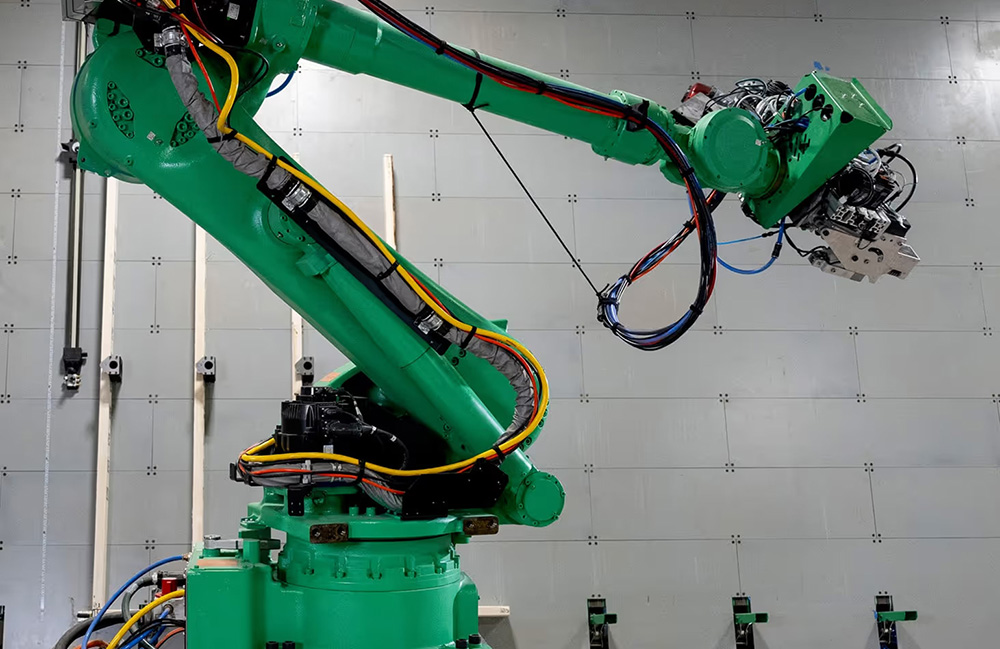 The Robot Report · United States Reframe Systems Raises $40M to Build Homes in Small Robotic FactoriesBoston-based Reframe Systems has raised a further $40 million led by Energy Impact Partners, with Counterpart Ventures, E12 Ventures, Global Brain, Thin Line Capital, Up Partners and LACI Impact Fund co-investing alongside existing backers including Eclipse and VoLo Earth. Founded in 2022 by three former Amazon Robotics leaders who between them deployed over 500,000 robots across Amazon's fulfilment network, Reframe runs small automated micro factories sited near the communities being built, rather than the large, centralised plants that have sunk previous modular attempts. Its next facility in Billerica, Massachusetts opens on 5 October with under $5 million of equipment and a design capacity of 500 multifamily units or 250 single-family homes a year. Read more → |
 TechCrunch · United States CivilGrid Raises $26M for a Google Maps of What Is Buried UndergroundSan Francisco's CivilGrid has closed a $26 million Series A led by Spark Capital, with Energy Impact Partners, Afore Capital, A*, Ford Street Ventures and SNR Ventures participating. Founder Josh Mackanic spent a decade as an engineer at PG&E, where a single unidentified pipe once halted a job for three days at a cost of around $60,000. CivilGrid consolidates utility assets, property ownership, geotechnical findings and environmental constraints into one map, drawing on records from more than 3,000 utilities, agencies and owners across California, Florida and Texas, with over 10,000 projects now on the platform. The US records roughly 200,000 utility strikes a year. A PG&E case study using CivilGrid identified $60 million of avoidable paving cost across 1,600 planned gas distribution projects. Energy Impact Partners counts utilities among its LPs, which is the validation that matters here. Read more → |
 Entrackr · India CarbonStrong Raises ₹12.5 Crore to Replace Half the Cement in ConcreteBengaluru-based CarbonStrong has closed a ₹12.5 crore seed round (roughly $1.3 million) co-led by IAN Angel Fund and Rainmatter, with Social Alpha, Spectrum Impact, Full Circle Ventures and existing backer Momentum Capital participating. Founded in 2022 by Harsh Jain and Vikramaditya Singh, the company processes industrial waste from coal, steel and other sectors into binders that can replace up to 50% of the cement in concrete. Two claims make it commercially interesting rather than merely green: the product is said to run about 30% cheaper than cement, and it drops into existing plants with no new equipment. Paid pilots and demonstration projects have run in Bengaluru, Hyderabad and Chennai. Read more → |
 GeekWire · United States Digs Raises $25.3M From Its Largest Customer, Not From a FundDigs, based in Vancouver, Washington, has raised a $25.3 million Series A led solely by Builders FirstSource, the largest US supplier of building materials, alongside a five-year commercial agreement to embed the platform across a network of roughly 140,000 builder clients. Total funding now exceeds $47 million. Founded in 2022 by Ryan Fink and Ty Frackiewicz, Digs runs the residential build from pre-construction estimates and blueprint collaboration through to post-move-in maintenance and warranty care, which Fink describes as a CarFax for the home and, more ambitiously, the first scalable digital twin of a house. Headcount goes from 37 to over 60 by year end. Read more → |
 Property Industry Eye · United Kingdom Reapit Takes Over £20M From Accel-KKR to Defend Its Position Before AI Resets ItUK estate agency software provider Reapit has secured more than £20 million of fresh investment from its existing owner Accel-KKR, taking total annual product and innovation spend past £40 million. The money goes into the core agency platform, a consumer-facing portal and AI capabilities aimed at helping agents hold customer relationships beyond the point of transaction. Accel-KKR managing director Park Durrett framed the thesis in terms worth borrowing: the AI era will not be won on newest technology alone, but on the strongest foundations combined with speed of innovation. Reapit has run the operational systems of UK agencies for 25 years. Read more → |
 EU-Startups · Germany Nanolope Raises €800k to Turn Ceilings Into Thermal BatteriesBerlin deep-tech startup Nanolope has closed an €800,000 pre-seed backed by IBB Ventures through its B# fund, alongside business angels from the energy, real estate and materials sectors. Founded in 2025 by Felix Marske, Eric Matthes and Dominik Schreiber, the company makes prefabricated panels using shape-stabilised phase-change materials that turn walls, ceilings and floors into passive thermal storage, absorbing heat during the day and releasing it as the space cools. The panels are made from plant-based EU-sourced feedstock, carry no rare earths and are around 90% recyclable. The commercial angle is the install: under 24 hours, no structural work, aimed at housing companies and operators of hotels and offices. As Marske puts it, the heating transition will be decided in the existing building stock, which is exactly where full retrofits are hardest to finance. Read more → |
 Royal Commission for Riyadh City · Saudi Arabia Riyadh Launches a Digital Innovation District Aimed at the Global Top 10The Royal Commission for Riyadh City announced the launch of the Riyadh Digital Innovation District, a development concept intended to build an integrated digital business environment in the capital and place it among the world's ten leading technology districts. It will target companies and specialist talent across six domains: artificial intelligence and big data, cybersecurity, computing and cloud services, the Internet of Things, blockchain, and robotics and unmanned aerial systems. RCRC says incentives will be offered to large and mid-sized digital companies, fast-growing firms and startups, alongside advanced digital infrastructure, with regular events connecting founders, engineers, researchers and investors. Read more → |
04 Smart Cities & Infrastructure |
 Equinix · Iceland CPP Investments and Equinix Close a $4bn Deal for Nordic Data Centre Platform atNorthCanada Pension Plan Investment Board and Equinix have completed their US$4 billion acquisition of atNorth, the Reykjavik-headquartered high-density colocation and built-to-suit developer. The platform runs eight operational data centres across all five Nordic countries, with sites under development in Sweden, Finland, Norway and Denmark plus expansions to existing campuses. atNorth keeps its brand and operates independently, CPP Investments takes a controlling stake, and Partners Group has elected to re-invest for 10%. Advanced cooling, renewable energy integration and heat reuse are the stated technical basis. Read more → |
 Utility Dive · United States A US National Emergency Now Covers Transformers, Inverters and Battery StoragePresident Trump declared a national emergency on 26 August and signed an executive order restricting the acquisition, import, transfer and installation of foreign-produced bulk-power system equipment, covering large transformers, utility-scale inverters, battery energy storage, high-voltage circuit breakers, generation turbines, industrial control systems and their associated software and remote-access capabilities. Local distribution equipment is excluded. The Department of Energy has 120 days to issue implementing rules, and the Energy Secretary may impose conditions on kit already installed, up to isolation, replacement or removal. The order applies to transactions initiated after 26 August. Read it alongside the drone tariffs from a fortnight ago. The hardware layer of the built world is being rebuilt around country of origin, and every electrification and data centre programme now carries a supply-chain compliance question it did not have last month. Read more → |
Long Read “Can AI Productivity Grow Fast Enough to Justify Big Tech's Spending?”Knowledge at Wharton
Wharton finance professor Jessica A. Wachter has put numbers to the question every investor in this space is circling. In a new paper with Jonathan Wachter of Point72, titled What Investment Data Implies About the AI Transition, they take the roughly $1 trillion that hyperscalers have committed to AI infrastructure and ask what has to be true for that spend to make sense. The answer is a productivity multiple of about 2.7 times current levels for the AI sector within a few years. Wachter herself calls that eye-popping, and the historical comparisons show why. The US IT boom from 1995 to 2005 delivered 1.5 times per capita GDP growth over a decade. The railroad era managed 2.8 times over sixty years. The fibre-optic build-out of the late 1990s, the closest structural analogue to what is happening now, implied roughly 1.3 to 1.5 times. Capital expenditure across Amazon, Alphabet, Microsoft, Meta and Oracle has gone from $155 billion in 2022 to a forecast $755 billion in 2026, crossing $1 trillion in 2027. Wachter is not a sceptic. She argues the multiple is achievable and that these are revealed preferences, dollars in the ground rather than intentions, and that the nature of the American economy is to jump on an opportunity and risk bankruptcy rather than leave money on the table. But the paper is blunt about the other side. The boom currently sits in investment data and not yet in productivity data. If it fails to materialise, the build-out will be the largest misallocation of capital in history. For anyone underwriting data centres, grid connections or the contractors serving them, that single sentence is the risk the whole asset class is carrying. Read the essay → |
|
|
|