Weekly Briefing Sunday, June 21, 2026 |
|
|
This Week in PropTech & ConTechCurated intelligence on deals, technology, and the built world.
|
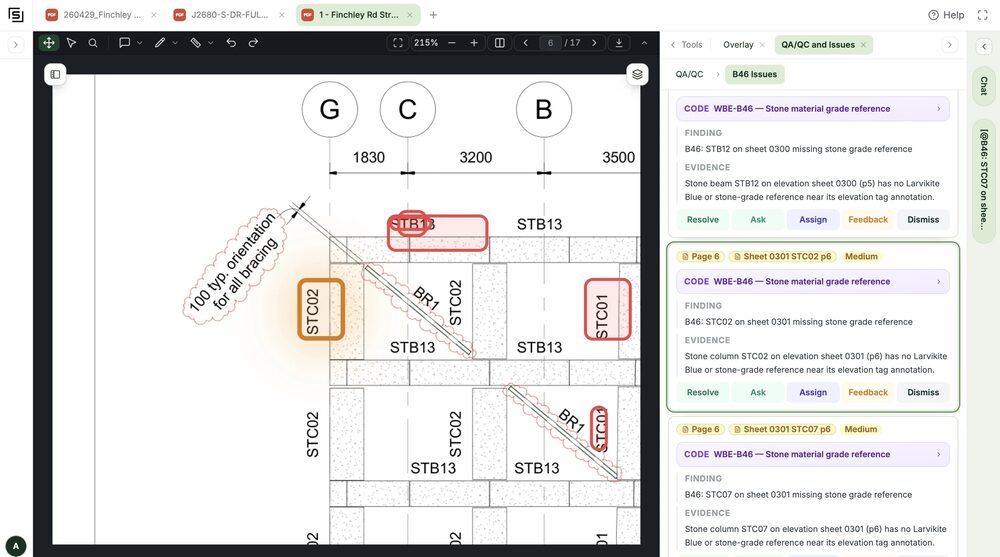 ENR Structured AI Raises $4.2M to Run QA/QC Across an Entire Drawing SetNew York-based Structured AI raised a $4.2M seed (about $5M total to date) for a computer-vision platform that automates quality assurance and quality control, running compliance checks across a full drawing set and returning resolution recommendations rather than just flagging issues. It is also partnering with engineering firm Syska Hennessy Group to refine the product against real MEP workflows. Read more → |
 Dalton Mills Dalton Mills Raises $9.2M to Let Trades Firms Build Their Own Software in Plain EnglishDalton Mills came out of stealth with $9.2M to build an AI operating system for home-services trades like plumbing, electrical, and HVAC, letting operators create and reshape their own software by describing it in plain language, rather than bending their business around rigid, one-size-fits-all tools. The pitch, "Replit for the trades," means a change that used to require a support ticket now takes about as long as it takes to describe. Read more → |
 Online Marketplaces · UAE / Global Property Portals Pivot to Conversational Search and Dubizzle's 'Sell with AI' Usage Jumps 15%The portal industry spent this week rebuilding search around conversation rather than filters. CoStar, working with Microsoft, rolled out Apartments.com AI, a chat-style rental advisor that answers property and neighbourhood questions and walks renters through 3D tours. REA Group's Housing.com added a ChatGPT integration for natural-language home discovery, joining Dubizzle Group's Bayut and Square Yards, both of which shipped ChatGPT integrations in the past fortnight. On the supply side, Dubizzle reported its 'Sell with AI' listing tool, which drafts an ad from a single photo, grew 15% month-on-month from April to May, and quietly opened a holiday-homes section for short-term UAE stays. Read more → |
 Arab News · Saudi Arabia Saudi May Construction Awards Hit a 2026 High at ~$8bnThe Saudi Contractors Authority logged 18 projects worth more than SR30.03bn ($7.99bn) in May, becoming the Kingdom's highest monthly award total of 2026, anchored by the SR18bn+ Aseer-Jazan Expressway plus Riyadh's Sheikh Jaber Al-Ahmad Al-Sabah Road and the Khuzam residential district. The Al Rajhi Capital Saudi Construction PMI climbed back above the line to 51.2, and the Authority expects around 20 more awards in June, nearly half in building and construction. Read more → |
 Outcome AI Cost Unpredictability Is an Architecture Problem, Not a Pricing OneDrawing on the conversations he kept having with CRE CTOs at Realcomm, Outcome co-founder and CTO Sid Jain pushes back on the idea that AI token costs are inherently unpredictable, arguing the variance comes from how most AI products are built, not from the technology. His critique of "outcome-based" and consumption pricing is sharp: it hands the customer a forecasting problem and shifts financial risk onto them, since the vendor earns more the more you use. Outcome's answer is to control consumption at the workflow level, with deterministic, scoped workflows like lease abstraction and CAM reconciliation that run the same way every time, with a cost profile firms can project and even bill to a specific asset, rather than open-ended conversational interfaces where every follow-up query compounds spend. Continue reading → |
 Parsons Parsons Wins $184M Navy Contract for Ruggedized Intelligence WorkstationsParsons (NYSE: PSN) was awarded a $184M-ceiling single-award IDIQ this week to support the US Navy's Intelligence Carry-On Program (ICOP), delivering portable, ruggedized workstations that improve battlespace awareness and readiness for operators at the tactical edge. It caps a busy stretch in which the firm also crossed $218M in 2026 GARDEM awards for the Air Force. |
 Canon Canon Becomes First in Japan to Get Third-Party Verification of "Avoided Emissions" Under New IEC StandardCanon said it is the first company in Japan to obtain verification from the Sustainable Management Promotion Organization (SuMPO) of a product's avoided-emissions calculation under IEC 63372, the international standard the IEC issued in January for quantifying the emissions an electrical or electronic product helps avoid versus a baseline. Canon applied it to its OCT-R1 ophthalmic device, which folds two instruments into one unit and so carries lower life-cycle emissions than the separate-device scenario it replaces, and it plans to extend the method to other products. Until now, avoided-emissions claims were calculated against a patchwork of industry-specific guidelines; Canon took part in the standardization effort meant to make those numbers comparable and auditable. |
Long Read “Tall Buildings Lead to More Compact and Productive Cities”Ahlfeldt et al. · CEPR / VoxEU
Drawing on more than 11,000 urban agglomerations and roughly 300,000 tall buildings, the authors use bedrock depth as a natural experiment to isolate the causal effect of building upward, and find that height restrictions quietly cost cities a great deal. Removing existing constraints would raise average worker welfare by about 3.7% in developing economies and 7.0% in developed ones, because vertical growth packs more opportunity into less land, shortens commutes, and lets workers cluster where they are most productive. Higher density does push up housing demand and rents, but the productivity and access gains more than offset it. The takeaway for anyone planning at giga-scale: the housing-supply debate cannot be only about horizontal sprawl. Permission to build tall is itself an instrument of affordability, mobility, and growth, and the land you preserve by going up is the scarcest asset of all. Read the essay → |
|
|
|