
Weekly Briefing Wednesday, June 10, 2026 |
|
|
This Week in PropTech & ConTechCurated intelligence on deals, technology, and the built world.
|
 Bricks & Bytes NavigateAI Raises $25M to Put an AI Copilot in Every Field Team's PocketSan Francisco-based NavigateAI raised $25M for an AI copilot built for field teams, spanning quality control, skills development, project scoping, and on-demand knowledge. It already sells across asset management, commercial builders, homebuilders, data centres, and the trades. A field-level AI that travels across trades and asset types is exactly the layer the Gulf's mega-pipeline lacks. Read more → |
 FINSMES LightTable Raises $22M Series A to Catch Design Errors Before They Reach SiteColorado-based LightTable raised a $22M Series A for an AI preconstruction platform that reads construction drawings and flags design errors, omissions, and constructability issues early, before they harden into change orders. Rework is the silent tax on every giga-project. Software that pushes error detection upstream into the drawings, where a fix costs a fraction of what it does in the field, is precisely the preconstruction leverage that compounds across a pipeline measured in the hundreds of billions. Read more → |
 PR Newswire Autodesk Acquires MaintainX, Pushing Its Platform into the Operate EraAutodesk has acquired MaintainX, a platform for managing maintenance, asset data, inspections, work orders, and operational workflows. The deal extends Autodesk into the "Operate" stage of the building lifecycle, alongside a Design, Plan, Make, and Build portfolio that already spans Revit, BuildingConnected, Fusion, and PlanGrid. The build is only the first act; the asset lives for decades after handover. Autodesk buying its way into operations signals where value is migrating, toward the data layer that runs a building once the contractors leave, which is exactly where owner-operators across the region will spend the next cycle. Read more → |
 Citybiz Findigs Raises $32M Series C to Turn Leasing into a Revenue DecisionNew York-based Findigs raised a $32M Series C led by RPM Ventures, with Nyca Partners, Frontier Venture Capital, and Western Technology Investment returning, bringing total funding to $80M. The platform moves multifamily operators beyond traditional tenant screening toward AI-driven leasing decisions, pairing applicant underwriting with rent-guarantee products, as owners face rising vacancies, higher operating costs, and mounting affordability pressure. Read more → |
 AGBI · UAE Unec Wins $517M Contract for Ora's Bayn Waterfront in GhantootOra Developers has awarded a AED1.9 billion ($517M) contract to Dubai-based United Engineering Construction (Unec) for the first phase of its Bayn waterfront masterplan in Ghantoot, between Dubai and Abu Dhabi. Unec will deliver 614 residential units plus infrastructure and landscaping, with work already under way and completion targeted in 31 months. Enabling works went to NMDC Group. Founded by Naguib Sawiris, Ora recently doubled Bayn's footprint with a 4.8 million sq m land purchase from Modon. Read more → |
 AGBI · Saudi Arabia Kingdom Holding Signs $1bn Land Deal with Sumou to Monetise Riyadh LandbankPrince Alwaleed bin Talal's Kingdom Holding has appointed listed developer Sumou Real Estate as exclusive development manager for 3.07 million sq m of Riyadh land, with Sumou overseeing infrastructure works plus the marketing and sale of plots over a 36-month window. Estimated sales run to roughly SAR4 billion ($1.07bn), subject to market conditions, and the scheme forms part of Kingdom Holding's long-term play to develop a Riyadh landbank that originally spanned 20 million sq m. Read more → |
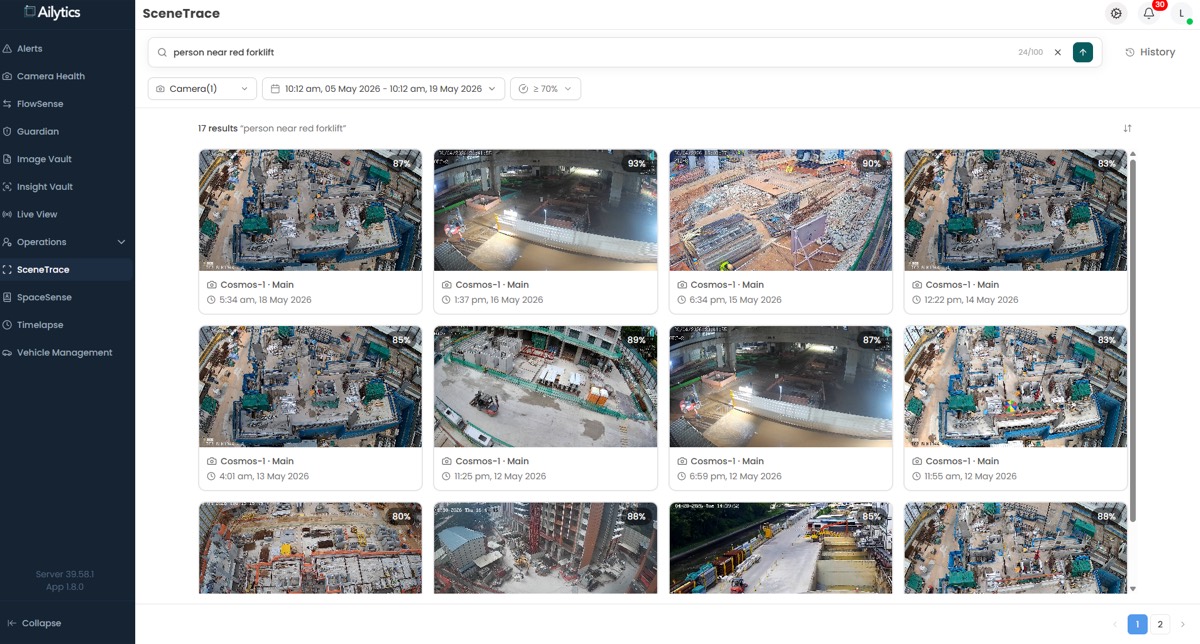 Ailytics Ailytics Deploys NVIDIA Cosmos 3 to Bring Reasoning AI to Heavy-Industry CCTVSingapore's Ailytics, with 400+ deployments across 11 countries and customers including Changi Airport, DHL, Laing O'Rourke, and Obayashi, has integrated NVIDIA's Cosmos 3 OmniModel into its Ailyssa platform, now in beta. It adds natural-language scene search, periodic hazard reasoning, false-positive filtering, and spatio-temporal SOP verification onto existing CCTV, cutting latency from minutes to seconds. The real story is economics: by reserving the costly reasoning layer for genuine judgement calls and leaving fast models to handle volume, Ailytics moves a whole class of safety use cases from research to revenue. For a Kingdom pouring concrete at giga-project scale, retrofitting reasoning onto cameras already installed is exactly the kind of zero-new-hardware safety wedge that travels. Continue reading → |
 Rensair The Cheapest Productivity Upgrade in Your Building Is the AirAir-purification specialist Rensair has put numbers behind an ignored asset lever: indoor air quality. Citing EPA data, it notes employees spend roughly 90% of time indoors, where air runs 2 to 5x more polluted than outside, and that elevated CO2 and PM2.5 measurably erode focus and decision speed. The fix is unglamorous: hold CO2 below 800 to 1,000 ppm, supply real fresh air, add hospital-grade filtration, cut VOCs, maintain HVAC. For PropTech and asset owners, this reframes air from a wellness line item into a yield argument: fewer sick days and sharper output show up in net operating income. As the region's Grade-A pipeline competes beyond location, instrumented air quality becomes a differentiator landlords can price. Continue reading → |
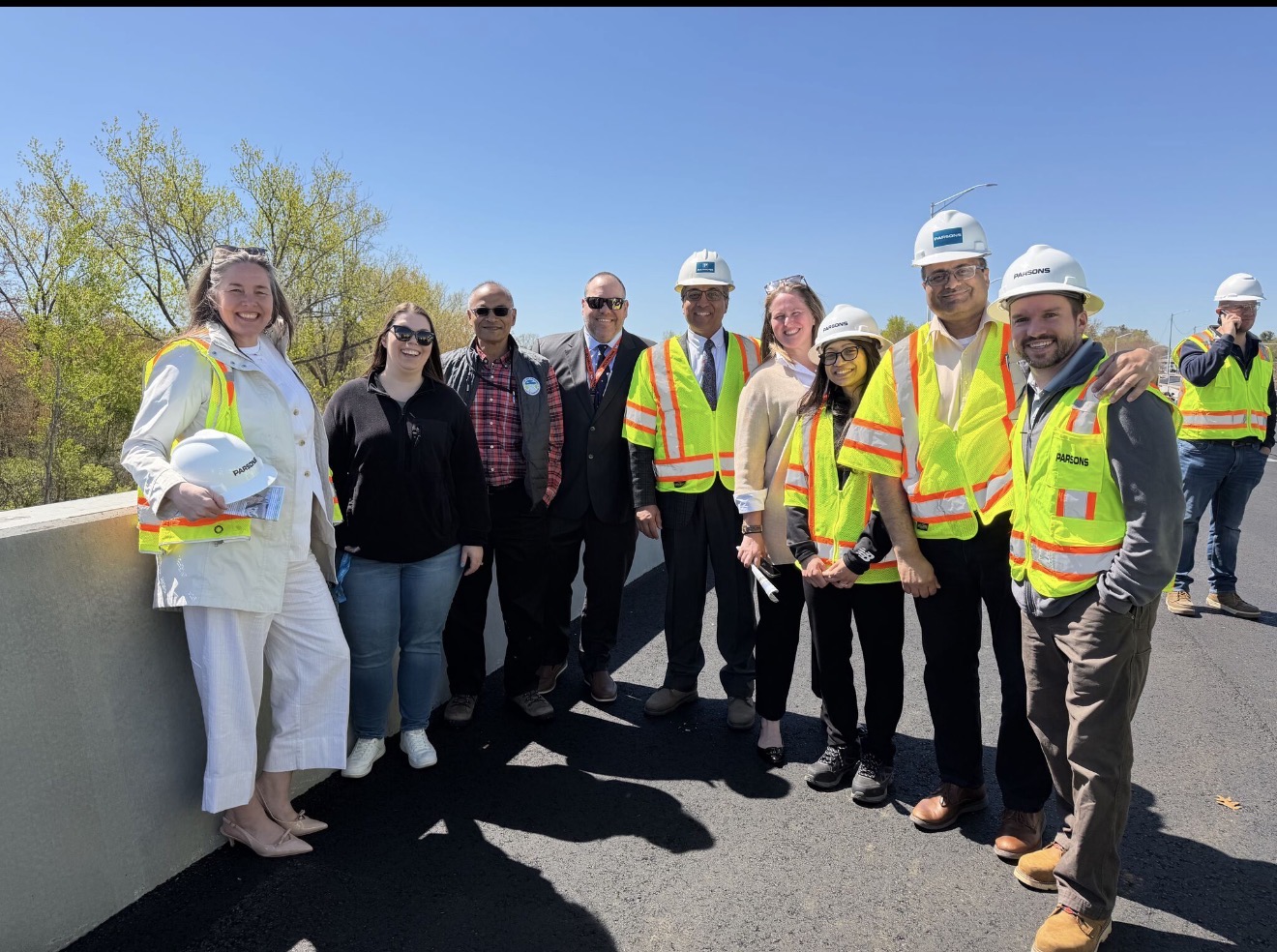 Parsons Parsons Breaks Ground on $721M Connecticut Interchange OverhaulParsons (NYSE: PSN) has broken ground on the I-91/I-691/Route 15 Interchange Improvements Project in Meriden, Connecticut, joining the state DOT and federal partners at an April 27 ceremony. The roughly $721 million, three-phase program targets one of the Northeast's busiest freight-and-commuter corridors, aiming to cut congestion, fix dangerous weaving and merging conditions, and lift long-term reliability. Parsons serves as engineer of record and prime design consultant, carrying the work from final design through construction support. |
Long Read “For Success with AI, Bring Everyone On Board”David De Cremer · Harvard Business Review
The failure mode of most AI rollouts isn't the model, it's the people left out of the room. De Cremer's argument, drawn from decades studying how organisations absorb new technology, is that leaders chase hyper-automation as a top-down engineering project, roughly 80 percent name end-to-end automation as their main tech goal, while ignoring the rank-and-file whose jobs and judgement the system will actually reshape. The result is predictable: employees feel excluded and threatened, quietly withhold the on-the-ground knowledge the tools need to work, and adoption stalls no matter how good the technology is. Read the essay → |
|
|
|
